Welcome to my blog Upstate Girl, (a.k.a Follow Your Bliss Part II), I am an independently published author. This blog is all about writing and the stuff that inspires me to write, the joys and obstacles that come along with the writer's life, and my fascination with the psychology of people and what makes them tick...the human condition, as is...and my love for words, playing with them and making sense of them...and I throw in a few photos from my acre of the world just to make things pretty...sometimes there are things I have no words for, only pictures will do.

*Copyright notice* All photos, writing, and artwork are mine (
© Laura J. Wellner), unless otherwise noted, please be a peach, if you'd like to use my work for a project or you just love it and must have it, message me and we'll work out the details...it's simple...JUST ASK, please.

Sunday, March 23, 2014

Living with a little monster for one year...he's a good kitty until he isn't...


Yes, it's been one year since the little monster came to live with us...he's a much better kitty now than he was back then...

The "little thug"

Looking out the window

Getting some fresh air

String and crinkly paper...a perfectly pleased kitty

Not everyone can say they have a little monster in their bathroom sink...


He has learned to love lap time...
He might be plotting to take over the world...or just contemplating his next move in Star Craft...whatever it is, the little wheels are turning in that little kitty head...

One year later....
When people ask me "How's the black cat doing?" I reply "He's a good kitty until he isn't." It's taken all year to get to this place with him...he's ours...goodness knows, no one else will want the little fiend, but we love him in spite of his unpredictable socio-pathic behavior issues. I can kiss the little black fuzzy face, rub his velvety soft, plump belly, but I'm always aware that he can turn on a dime. He still bites and draws blood on occasion.When he makes that "squeak" noise EEP! or OIK!  look out...

His tail is always twitchy so that is at times a false positive...or false negative...or...who knows what the fuck it means, he's unpredictable.

It makes me sad to think that someone abused him to make him the way he is...we've been patient with him, we have loved him, kept him safe, have made him fat, and spoil him rotten with lots of toys and attention...he lives in the bathroom, so he's always going to have visitors. I feel bad that he doesn't get along with the other cats (yet.) We're working on it. We transfer him to our library and to the living room alternately so he has lap time with people and there are doors with windows through which he can glare at the other cats and stick his paws out at them...and they can stare at him without fear of him jumping on their backs and coming away with a mouthful of fur...

Other people gave up on him...which is how he wound up hiding underneath our porch one year ago during a bitter cold spell in March. Hungry, cold, scared, his ear clipped by a TNR group and the fur growing back on his backside where he had recently been neutered. Cut loose to work it out on his own because he was unwanted...

I feel good that we have adopted him into our family...which means, we have saved his life.

He's a little monster, our little Monster... yes, his name is The Little Monster...or Monster for short.


Saturday, March 1, 2014

Haroun and the Sea of Stories by Salman Rushdie

…an Unthinkable Thing happened: Rashid Khalifa, the legendary Ocean of Notions, the fabled Shah of Blah, stood up in front of a huge audience, opened his mouth, and found he had run out of stories to tell. – from page 22, Haroun and the Sea of Stories, by Salman Rushdie

I came to this book via my Fred, who is taking a class in which this book happens to be on the textbook list—he passed it on to me when he finished it. From the first paragraph, I loved it—let me tell you what I discovered during my journey to there and back again. This is a book to be read with a light heart and with no set parameters—the delightful wordplay and singsong rhythm of the prose made me laugh a good deal. It reminded me of Dr. Seuss stories so much that in my mind I was able to construct a fantastical landscape, populate it with the wonderful creatures and people described, brightly colored as traditional Indian Folk Art (just Google Mithila Painting to see what I mean.) It is a story about storytelling. It is a fairy tale in the tradition of all fairy tales, an allegory full of the tallest of stories that hit home so true—ideas, freedom, the importance of storytelling and imagination. As it was written during the time Rushdie spent in hiding, it is a very revealing narrative about freedom of expression. A father losing his ability to tell stories due to upsetting personal circumstances and because of this temporary lapse in his ability and desire to do so, someone official decided to turn off his “subscription” to the Story Water supply from the Great Story Sea—my goodness, that’s worse than writer’s block.

What’s the use of stories that aren’t even true?

This peculiar question is raised by an outside character of dubious intentions and is the initial cause of this situation for the storyteller. It’s always odd when I run up against someone who thinks that way—it makes my heart hurt because that’s a person who is missing a valuable resource in life—imagination—the ability to suspend belief for just a little while to enjoy a story. I could never figure out why it was such a crime to ‘make up’ a story—lying to get out of trouble is a different thing entirely, telling a story for its entertainment value is completely different, but somehow it’s believed by some to be dishonest. There have been many books over the years that have caused a fuss for one reason or another, sometimes they strike a chord in people so sharply that it pisses them off to no end—some of our greatest stories are smuggled out of places where they are forbidden. The way I see it from my size 6 ½’s, that’s somethin’ special when a story causes a ruckus—oh, well, you can’t please everybody.

When writing fiction, pen to paper, from the first word onward, out there beyond the fringe of the known world is the place labeled “here, there be dragons!” It is a magical experience to make up stories—it is a gift that an author is fortunate to have, and a gift for the reader who is fortunate to receive it.

Having some knowledge of Indian mythology and culture might be to the reader’s advantage coming into this story, but it’s not a necessary requirement to read this book, it’s accessible language has an endearing quality that is as comfortable as a bedtime story for a child—magical and surreal—exotic and dream-like. It is comprised of a good many familiar elements, classic literary references to Alice in Wonderland, Peter Pan, The Wizard of Oz, Lord of the Rings, One Thousand and One Nights, it also reminded me of the Hitchhiker’s Guide to the Galaxy a little bit. Then there is a Beatles song I Am the Walrus happily tucked into the mix with the characters the Eggheads and the Walrus who are the inventors of the Processes too Complicated to Explain (P2C2E)—and of course, Dr. Seuss.

It’s loads of fun, it’s priceless and timeless, I adore it.

Sunday, February 16, 2014

Under the Greenwood Tree by Thomas Hardy

It was a morning of the latter summer-time; a morning of lingering dews, when the grass is never dry in the shade. Fuchsias and dahlias were laden till eleven o’clock with small drops and dashes of water, changing the colour of their sparkle at every movement of the air; and elsewhere hanging on twigs like small silver fruit. The treads of garden spiders appeared thick and polished—from page 91.

What a fine encapsulation of a summer morning to read on a cold winter night — and what a fantastic little book! I had to read something short and sweet before I tackle another big book, and I’m glad I found this one! It came highly recommended by a good friend of mine, so I ordered a copy and had recently added it to the tower of TBR books on my desk—one of the towers (plural that, I do have a lot of books to read!) Anyway—

A lovely, light-hearted story from a simpler time and place — little as it is, it is still chockfull of larger themes about life, love, society, morals, the passage of time, and progress. Young Dick Dewy and his fixation on Miss Fancy Day is the centerpiece attraction (and distraction) — oy, she’s special, ain’t she? (I do love the names Hardy chooses — he really puts a good deal of thought in names and the personality of the character he’s christening.) Fancy Day lives up to her name, she’s so vain, and although she acts as if vaguely aware of her power to stop men in their tracks, she’s more enamored with her clothes and hair than with the fellows once she’s gotten their attention—she becomes so rattled it’s laughable. Fancy and Dick don’t even have to kiss to become bothered, sharing a basin to wash their hands is quite steamy for the time. “Really, I hardly know which are my own hands and which are yours, they have got so mixed up together,” (Fancy).  This is as erotic as it’s going to get — so innocent in our time, but wickedly scandalous back then.

As for young Richard Dewy, “I’m afraid Dick’s a lost man.” His father says along the way. I feel bad for the poor lad who is smitten with her and root for him to win her over, but I also feared for him, I’d hate to see the poor fellow wounded by this darn damsel because of her flirty wiles and her father’s objection. (Naturally, if they went along nicely without drama, there wouldn’t be a story, right?) Looking over his shoulder, Dick notes how the married elders have become so blind to romance, as if realizing for the first time that they must’ve gone through the emotional upheaval of passion once upon a time — but to see them undemonstrative and so dreadfully practical seems to distress him — he can’t imagine himself being so dull should he marry Fancy Day.  Oy, he’s such a nice bloke, a hard-working, solid sort of fellow who was a fine catch for any lass to latch onto, they’d consider themselves lucky to have him—seriously, a fellow who walks a mile out of his way in the rain just to see her for a precious few minutes is a dear thing, to be sure! (My mother knew when my Fred was carrying the big bag of kitty litter home from the grocery store that it was “serious”.) Fellows don’t do such foolish things without a good reason — or perhaps, their good reason has left them, they’re just bewildered and can’t help it — a little of both, perhaps.

But it isn’t just about these two — it’s much more than that. I laughed a lot through this book — it’s natural sense of humor winking as the elders watch and nudge one another about the youthful courtship of Fancy and Dick, reminisce, and then go about their business. I adore Hardy and his language, his beautiful descriptions of his fictional Wessex, and the undeniable lamenting of the loss of the old ways of doing things at the hands of the young as their modern ideas and instruments emerge to turn out the old-fashioned traditions of the elders. Honestly, the Mellstock Quire sounded like a fun bunch, more in line with the community than the contemporary contraption of an organ; but as things go, the elders will eventually die off and the younger may not fill in the gaps — it is how it goes.

In spite of its place in time, Under the Greenwood Tree is timely and timeless as a good bit of literature should be. At my current age of 51, I have seen a good deal of change take place and have concerns that the younger generations coming up are not going to care about preserving the things that I hold dear — my work in an art collection especially makes me keenly aware of this. Nothing makes this awareness come home more than when your parents pass on and you are left to clear out their house — especially when it’s the house you grew up in where the relics of childhood remain and the relics of relatives long dead. The old photographs are stunning, their depiction of simple pleasures and quiet existence in a small town documented — the wonders they must have witnessed, the progress that influenced their lives. I can only imagine how appalled my grandparents and parents were of changes that happened during their time, as not all progress treats everyone equal; changes that made them feel less able to keep up and feeling brushed aside as the youthful growth of society ran rough-shod over the simpler times.


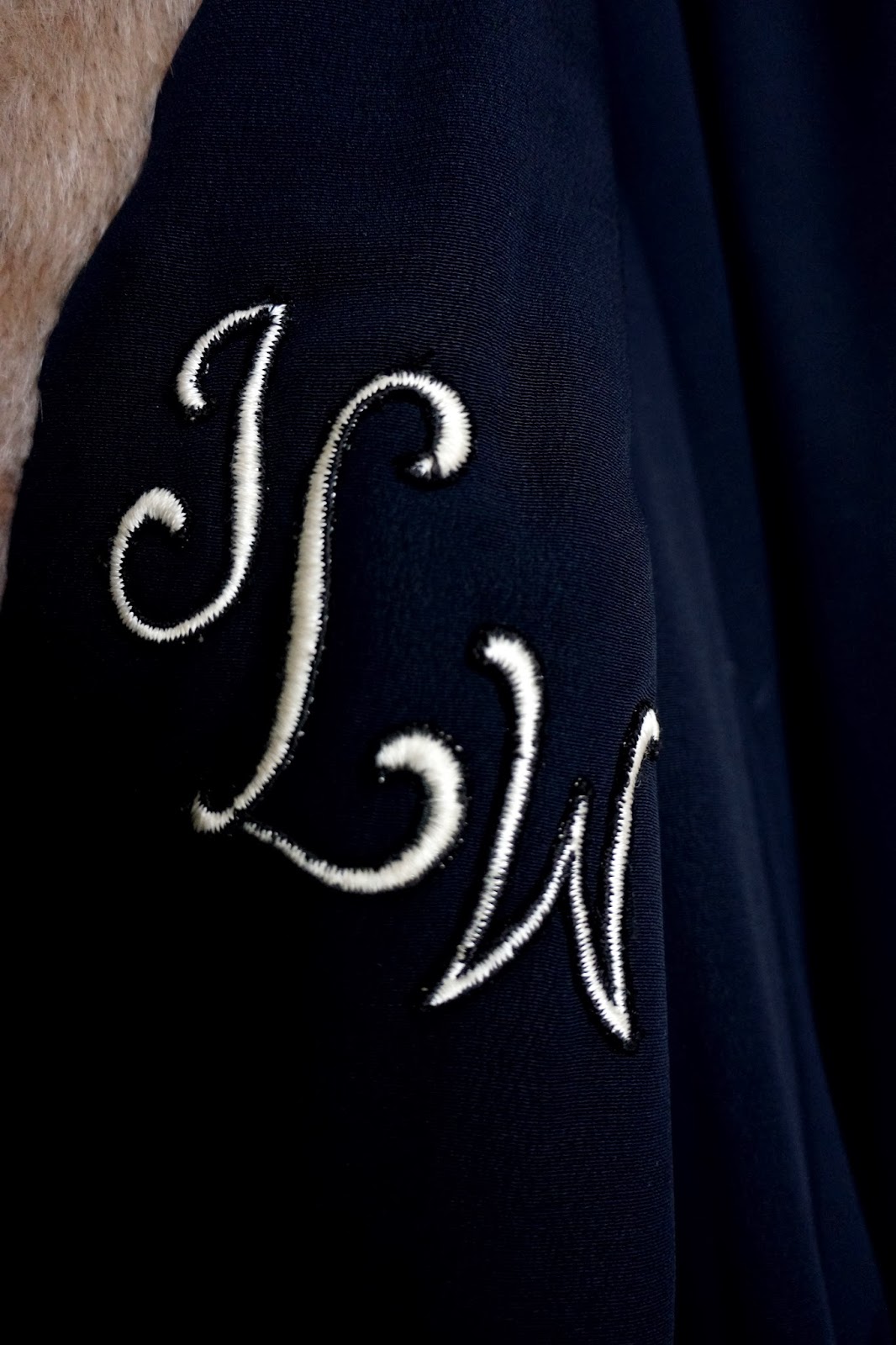
Just last weekend, I acquired a mink coat that belonged to my mother; her initials are monogramed on the lining. We never saw her wear it, nor did we know the thing existed until I opened the garment bag that contained it. I’m assuming that her mother and father bought it for her, I can’t imagine my father having that kind of money to buy it — and in spite of her beauty queen ambitions as a teenager, I don’t think it was her taste. For what it is, it’s beautiful, in perfect condition, it’s as if she didn’t wear it (I haven’t found pictures of her wearing it.) These days, it’s an object so vilified for what it is — as an animal lover, I have personal objections to the process that created it. It is a relic from another time.

Time changes everything.

Mom's mink coat, c. 1950

Monogram on lining

detail where collar meets shoulder

Just a reminder...books are powerful.


Saturday, February 1, 2014

The Goldfinch by Donna Tartt


“—if a painting really works down in your heart and changes the way you see, and think, and feel, you don’t think, ‘oh, I love this picture because it’s universal.’ ‘I love this painting because it speaks to all mankind.’ That’s not the reason anyone loves a piece of art. It’s a secret whisper from an alleyway. Psst, you. Hey kid. Yes you.” Donna Tartt, The Goldfinch

Books can have this effect on a reader too, they get into your head and under your skin—make you itch in a pleasant way and they haunt you—yup, I’m joining the five star pile for The Goldfinch, okay? Donna Tartt has produced three novels in thirty years, which doesn’t sound like much, but damn they are BIG ONES. Books (in general) are like Dr. Who’s Tardis, small on the outside, big as the outdoors on the inside, then there are Donna Tartt’s books—OMG they are ginormous on the inside—more than just another world or a construct—holy crap, they’re big gorgeous monsters! You approach them not to conquer, but to understand, appreciate, to identify with—this is literature—a human document. To offer up my gut reaction about it—I loved The Goldfinch, plain and simple. Why do I love it? That’s not so simple, but I’ll try to explain it.

I read the first fifty pages at bedtime that first night and my eyes were as wide open as peeled onions from thinking about it long after I turned out the lights. The following nights, I took it in smaller bites to savor it—yes, I could’ve easily blasted through it, gobbled it up gone and done in no time, but I didn’t because I needed my sleep. In a way, I was glad that the book slowed down after those first fifty pages, I went with the flow and enjoyed the view. Indeed, there is so much detail and so much going on, it would be too easy to blink and miss something, but I didn’t miss a thing.

As an artist and a museum worker, I enjoyed the book on the professional level as well as the writer/reader part of me. As a reader of Russian Literature, I found the references made to Theo’s friend, Boris, reading Dostoyevsky’s The Idiot were appropriate in spirit (yet another multilayered psychological and philosophical study of the human condition.) I was glad that I had read The Idiot fairly recently (2008) so it was still fresh enough for me to recall it (loved it.) I’ve read reviews that compare The Goldfinch to various Dickens novels (David Copperfield, Great Expectations, and The Old Curiosity Shop.) It is, but it isn’t, more isn’t than it is—it’s Donna Tartt writing Donna Tartt, of her time and place—Dickens makes a good literary lighthouse to point to, I guess.

One potential pothole I watched for was how she handled the technology of cell phones and the Internet, because the gadgets and the access changed so much from the time she first started writing the book to its publication. She was wise enough to keep the use of these devices forgivably ambiguous enough to make it work for the span of time during Theo’s journey. (It’s a small detail, and writers do fret about these details, trust me on this.)

The Goldfinch is different from her two previous works, The Secret History and The Little Friend (If I hear one more whiner crying that it's not like The Secret History, I'll scream. Of course not! Idgit.) The Goldfinch has a personality of its own— a sibling of the other two. Like children, the first-born will be different from the second, and the third—or the last in a long line of children forming a new generation, each one different as much as they are related. They may look alike or sound alike; they are clearly from the same parents because of the color of their eyes or the curl of their hair, short or tall, blah-blah-blah. I love The Goldfinch for what it is—a long, complicated tome, intense, tragic, brutal, and heartbreaking—an unhappy tale; it’s just how things are for Theo Decker. It has an unsettling atmosphere, so finding lighter moments became restful—these were the gems of forgetfulness that arrived to make things feel “okay” and “safe” for a little while (anyone who has lost a loved one, will relate to that temporary amnesia, trust me on that too.) Yet, the nagging anxiety was always within reach, hidden in a shopping bag, or a pillowcase taped to the back of the bed, or tucked away somewhere locked. The repetitive nature of the narrative, in my mind, shed light on the mental state of Theo as he attempted to cope—obsessive and compulsive, dangerously so—the book truly had very unpleasant moments. A young man whose life was forever altered in an instant, there is no being “normal” after that sort of experience—the psychological damage is done—the kid is broken, and becomes a broken adult wearing a veneer of normality; he’s always hiding something. I admire the work, the research, the years put into it. It has everything including the kitchen sink in it—it’s well-crafted and every word accounted for—it all mattered. Tightly wound, molded, modeled, constructed—polished, polished again, and then polished some more. (The Secret History as the “first born” possesses that magical raw beauty of being the first of its kind—The Goldfinch in comparison may have been “spoiled” with too much love, but turned out just fine in spite of it—it is a work by a mature author, that’s the difference.) It is gutsy and classic—not too many write like this anymore, dang, the depth of description at times was dense—lovely. At times, I was truly amazed that it was let through at such a stunning size and as verbally extravagant as Dostoyevsky (or Dickens), yet, I could not find reason to cut it to pieces. The digressive philosophical ending at first glance felt a bit off when I waded into it, but the water was temperate, I understood it as being an epilogue, returning to the beginning—Theo looking back from a safe distance of time to review and absorb—to purge it one more time. I found it satisfying.

Books like these don’t come around often enough, I took my time with this one—treating myself to a story that I have waited a very long time to read. I was not disappointed—only that it ended, and who knows when the next one will come into being…LJWR, 2/1/2014


Monday, January 20, 2014

Elizabeth...


My Fred with the two wee goats Tessa and Pebbles, and Elizabeth (of course.)
  It's a little more than five months since I received this sweet little donkey and her little pygmy goat friends...Elizabeth is such a sweet little critter, I'm so happy to have her in my life!
Looking for treats

Elizabeth had her hooves trimmed on Sunday morning
 
The farrier sez her hooves are doing very well...I'm always amazed how tiny her hooves are!

A nice portrait of wee Pebbles

The Gang of Goats and one Donkey

This little donkey is a spot of sunshine on cold winter days...

Elizabeth!

Monday, December 16, 2013

Max, the passing of one of the best of good boys

Max


October 20, 1999-December 16, 2013

He had a nice walk this morning, fresh snow (his favorite), and then while he took a nap, I snapped a few photos of him sleeping, such a good dog, the best of good boys. He's been slipping away from me slowly for quite some time, at the most, for two years since we suspected that he had a brain tumor. Other than this suspicion, I've watched the aging process do its thing to my old friend who has been with me since he shyly tip-toed into my yard one spring day twelve years ago, smelling like skunk and needing someone to look after him...a needy type.


His former owners no longer wanted him, they gave him away to us, saying he was an "escape artist"...well, he never ran away from us, we paid attention to him, we didn't forget about him. He was with me every day, I walked him, talked to him, worked in the garden with him nearby, photographed the wonders that I found on our one acre of the world during our walks, and he was there while I wrote my novels in their early drafts, his steady and quiet presence always there, waiting, watching my every move, always patient...he learned that the sound of my thumb drive connecting with my laptop meant that we will be going for a walk soon, so he'd jump up, ears perked and tail wagging.

He loved the snow
sniffing for baby bunnies
 Once the skunk smell cleared off him, he carried the smell of the beach on his fur...a warm sweet smell that I will never forget...he never lost it, he still smelled good even as an old fella...most old dogs don't...
11/29/2013

Because of thunderstorms, he would hide in the bathroom, bunching up the rugs to create a bunker for hiding in...

Sniffing for stories

He made doggy snow angels...

He loved his cats...

...and they loved him...Tiggy-Pooh especially...

Max in the daisies...

He really did not like having his picture taken...

...and because of his being so camera shy, I have a lot of pictures of the back of his head...


Watching the world go by...

The best of good boys!
I cannot say enough how much I will miss him...but I've been missing him before he actually left, his dementia took him away from me a little bit at a time...it was rare these last few days that I could see the dog that I knew in his eyes...and it got harder and harder each day to have him know me like he used to...

Rest in peace old friend...

Saturday, November 30, 2013

The Storyteller by Mario Vargas Llosa


“After, the men of earth started walking, straight toward the sun that was falling. Before, they too stayed in the same place without moving. The sun, their eye of the sky, was fixed…They were peaceable and without anger. Before the time afterwards…Then why, if they were so pure, did the men of earth begin walking? Because one day the sun started falling. They walked so that it wouldn’t fall any farther, to help it to rise. So Tasurinchi says…That, anyway, is what I have learned— (from pages 37 and 38)

The Machiguenga walked to keep the sun from falling from the sky—the story has variations, and there are many stories about the moon, death, the fireflies, floods, droughts, sickness and the little devils that cause all kinds of troubles, and there is even a Gregor-Tasurinchi metamorphosis story—what a beautiful book, it is joyful, it is sad, it is hopeful—it is a human document. I thoroughly enjoyed myself reading it, a real treat.

Storytelling, what a magical gift—I starved for stories as a child and often made up my own—I was called a liar by other kids who didn’t like it that I told stories that sounded a bit too real, so they must be a lie—and I, a liar. Sometimes, when we’re young, the imagination is a wee bit too overactive and the stories that come from that curious place where they are conceived feel real enough—it’s learning to understand the difference as the creator as well as the receiver of the stories. Ah, fiction—a precious gemstone of many facets –the truth and the lie, the mundane and the adventure, all wound tight together, a thread of thoughts, a word or two of conversation, an observation—a sky, a land, a path to follow through the trees—tree trunks, roots and branches—light and shadow—a sense of place and time, stories occupied by people and their doings.  It’s amazing how stories come together while we’re making them up. Storytelling is a very old tradition—the passing on of knowledge, the retelling of legends—the explanation for the how come of things made up on the spot by the tribal shaman and the story told and retold, built upon and told again—shared, passed on. Storytelling is the preservation of a way of life—an existence threatened by humanity’s constant progress—well, some of us progress, while others prefer to cling to old ways, taking comfort in the familiar stories, familiar rituals, familiar ways of doing things—it all served a purpose. Why must we [humans] impose ourselves on the ones we feel we must conquer? Convert. Exploit. All the profits lining the pockets of some rich bastards who never once got their hands dirty in the process of exploitation. The way of progress stinks, it’s corrupt, it is morally wrong—yet we do it, have been doing it for ages—assimilating—trying to eradicate what is not like us. It’s a sad old story, one that repeats itself time after time, after time—slowly wiping out cultures of people and the creatures great and small, spoiling land, polluting the water, destroying everything in our path like a force of nature. It is not sustainable.

Before the time afterwards…

I lament. I’m getting older now and so I lament for there are things that I hold dear that are slowly being dissolved by progress—many of us see it, but do we admit to it? Or do we just shrug and chalk it up to ‘progress’? We’ve always done it that way—why change what works (even if it’s not working for everyone)?

I want to believe that the Machiguenga of Llosa’s story are still walking—don’t let the sun fall from the sky—you’ll never get it back again once it’s gone.

That, anyway, is what I have learned—

Monday, November 18, 2013

Thoughts about Doris Lessing and the Golden Notebook...


22 October 1919 – 17 November 2013


The Golden Notebook is the kind of book that I have a special name for — it is a “human document” (I can envision Doris Lessing writing this [book] — pen to paper, head down, breathless and barely breathing, caught up in the intense flow of it, from beginning to end — for there is nothing more beautiful and wretched than the physical and mental experience of writing a novel.)


It is an important book of its time and it is just as relevant now as it was fifty years ago, its themes remain timeless. It’s more than just a story with a beginning and an end and a bunch of stuff going on in the middle — oh, my dear, it is so much more than that! This is a real book — it is loaded with energy and emotions — it is dense with carefully wrought words, its texture is raw and complex, its psychological landscape is gorgeous and ugly at the same time. The characters are uncomfortable in their own skin; they love and hate — and can be indifferent; they live with the uncertainty of free will and they acknowledge their destiny, burdened by the dogma and history of those who came before them and the expectations of others. No one simply comes into this world, pours themselves into a mold and lives life confined to those perfectly formed edges. They naturally spill out, do such wonderful things right alongside of stupid things; they fitfully cringe at their flaws, yet they will go ahead and make the same mistakes over and over and over again — it’s what people do — what we are — being perfectly human, grievously imperfect in spite of our intelligence and enlightenment, blithely muddling along one breath at a time. People are dichotomies and they struggle within themselves to achieve balance — seeking beauty, looking for love. It’s an ongoing growth that we experience from birth to death, those of us who are more self-aware, like Anna Wulf, and any of us who are creative, struggle the most — part of our “being” is this struggle — this questioning, and on occasion, letting go enough to dream or to go mad, and then come back to reality, relieved or perhaps more pissed off than ever about the way things are. We go on, influencing those around us in one way or another, always looking over our shoulder and second guessing ourselves, trying to make things right — tormenting each other with truths and lies — moving on with faith and forgiveness, living with a wealth of happiness and sadness. Life goes on, trundling forward, although burdened by the bulk of the past — there is hope. For heaven sakes, don’t take my word for it, or the word of anyone else, just read it and find out for yourself.

Sunday, November 17, 2013

Wonderland by Joyce Carol Oates


This book is for all of us who pursue phantasmagoria of personality—   

What is personality—can it be destroyed as the brain surgeon, Dr. Perrault, declared “with a tiny pin in my fingers.”—? The formation of personality according to the reciprocal determinism theory, an individual’s behavioral genetics and social environment and consequences have a direct impact on the formation of personality—and then there’s the idea that personality possesses the power of free will, personality is characterized by morality—there is more, but I’ll stop there, all of this makes my brain hurt, but I think about this stuff all the time, it fascinates me. The philosophical divides and resulting debates regarding our being human are all frustrating and wonderful—Free Will v. Determinism; Heredity v. Environment; Uniqueness v. Universality/ Active v. Reactive; Optimistic v. Pessimistic—They’re all right in their own way, yet at times a bit too certain of themselves. Goodness knows, I’m not an expert, but I can’t believe there is a rigid set of parameters that make up a personality in the “this is how it is because we say so”—you know, that sort of shit always makes me dig in and say “No fuckin’ way.” Some people just gotta have the Coke or Pepsi argument just for the sake of arguing about something—Good grief, if a little chocolate free will gets in your determinism peanut butter, let it be, it all ends up in the same place. (Trust me on this.)

Wonderland is an exploration of the personality—it is a book that I call a “human document.” The human being is such a complex character, a fascinating mystery—the first time I read Wonderland it was like riding a rocket to the moon.  I remember being told that it was a “good one” and checked it out from the library—I tried to ignore the librarian’s gentle attempt to direct me toward something more age appropriate like the latest Walter Farley since it was well known that I loved horses—but it was not long after I read Dickens and Shakespeare in school, so I knew what I was looking for—I wanted “a good one”, something real. Seriously, I had trouble enough with reality since I spent a good amount of time inside my head, and the way things were at the time, well, sometimes it did not feel real. I wanted something to feed that gnawing sense of “I want more”; I wanted to go into the deep end of the pool where I had to be bigger to touch bottom—I’m not just talking about the physical “bigger”. I might’ve been around 14 or 15 when I put the weighty tome into the basket of my bike and rode off to somewhere quiet to read it. I had a favorite tree in the woods where no one would bother me. It was a fat book (which I did not find daunting at all.) It had a bright yellow dust jacket with the crinkly protective plastic cover—it had that special library book smell that went along with summer days. The book was shocking, it was terrifying, but it was fascinating—that “adult” forbidden fruit sort of thing that I gotten myself into when I was impressionable and testing the waters of life beyond childhood. The characters were real—too real—they were nightmarish monsters and selfishly up to no good—I couldn’t trust any of them to not cause harm or to make a disaster of every moment. I held my breath a lot, grinding my teeth sometimes. Some of what was going on went over my head as I found their adult actions to be baffling—yet I accepted all of it as the author’s intention and trusted her wisdom to tell the story as she saw fit—I leaned forward and read on. After I made my way through this novel, I knew there was no turning back. Dang—after reading it, I wanted to be a writer of such arcane things as personality and have spent years picking away at words of my own. I’ve been wanting to re-read Wonderland for a very long time, but didn’t want to until I accomplished writing something that I could call mine—I also didn’t want this monumental book to become something for me to navigate by—but nevertheless, it was there, a distant lighthouse, an encouraging reminder and a stern caution. Now that I have read it with the experienced eyes of someone who has delved into the mines to unearth my own “human documents” because of their exploration of ‘being’, I was actually surprised by it—and not just surprised by how much I had forgotten.  The magic is still there, but different for me now—it still gives me the chills in a good way; it’s just as frightening and nightmarish as ever, it is timeless, and ever so interesting—exploring the phantasmagoria of personality.

Did I tell you I love this book?


photo credit: Jack Robinson